Read Your Lease Before You Buy That Smart Lock: A Tenant's Translation Guide to 'No Alterations'
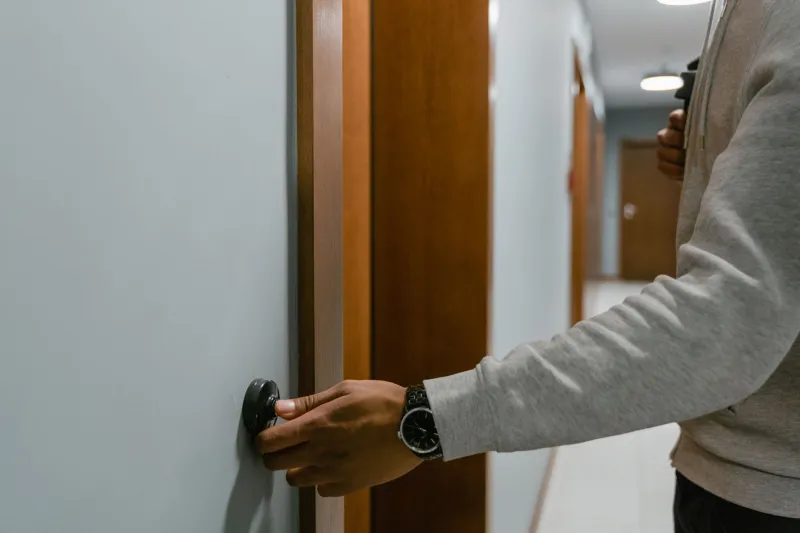
Here's the thing about smart home gear and rental agreements: the two were never introduced. Your lease was probably written before video doorbells were common, and it almost certainly doesn't have a section titled 'Connected Devices.' Instead, you get vague phrases like 'no alterations' and 'reasonable modifications' — and those phrases do a lot of heavy lifting.
The good news? Most of what makes a home smart requires nothing more than an outlet and a Wi-Fi password. The tricky stuff is the gear that touches walls, doors, or wiring. Let's sort it out.
The Four Phrases That Actually Matter
Lease language all comes down to a handful of recurring terms. Learn what they mean and you'll know exactly where you stand.
'No alterations to the premises.' This is the big one, and it's narrower than it looks. Legally, an 'alteration' usually means a permanent change — drilling into studs, rewiring, replacing fixtures. Swapping a light bulb for a smart bulb is not an alteration. Neither is plugging in a smart plug. Landlords sometimes read this clause more broadly than courts do, but the plain meaning protects most plug-and-play tech.
'Reasonable modifications.' This phrase shows up in leases and in fair housing law, and it typically applies to accommodations for disabilities — think a video doorbell for someone with limited mobility, or a smart lock for a caregiver with an access code. If a modification falls under this umbrella, you have far stronger footing, and in many cases your landlord cannot flatly refuse a reasonable request.
'No permanent fixtures.' Translation: if you can remove it and leave the wall looking like you found it, you're probably fine. Command strips, adhesive sensor mounts, and screw-in smart buttons live here.
'Landlord's prior written consent.' This isn't a denial — it's an invitation to ask. Landlords often say yes to reversible upgrades, especially when you offer to restore the original hardware at move-out.
The No-Permission-Needed Pile
If it plugs in, sticks on, or screws into a socket, you can generally install it today:
- Smart plugs and smart power strips
- Smart bulbs (just keep the originals in a drawer)
- Battery-powered sensors — door/window, motion, water leak
- Battery cameras placed on shelves, not drilled into siding
- Smart speakers and displays
- Plug-in smart outlets and hubs
None of these alter the property. When you move, they leave with you, and the unit looks untouched.
The Ask-First Pile
- Smart locks. The grayest zone in all of rental tech. Swapping a deadbolt changes the physical lock on the door, and many leases specifically restrict lock changes. A lock that installs over the existing thumbturn (like several retrofit models) is an easier sell than a full deadbolt replacement.
- Video doorbells that use existing wiring. Wired versions may need the old chime disconnected. A battery model with peel-and-stick mounting sidesteps the whole conversation.
- Smart thermostats. Swapping a thermostat touches low-voltage wiring. Many landlords say yes — a smart thermostat can lower their utility costs on units where they pay — but ask.
- Hardwired cameras, in-wall sensors, anything involving drywall. Just don't.
Know Your State's Baseline
Tenant law varies, but a few patterns hold across most of the US. In California, tenants can request modifications for disability-related needs, and landlords must allow reasonable ones. In Texas and Florida, leases tend to be enforced as written, which makes the 'alterations' clause the whole ballgame — stick to the plug-in pile. In New York, state law requires landlords to provide peepholes and working locks, which cuts both ways: you can't remove security hardware, but landlords can't ban devices that add security without touching anything. Massachusetts and several other states let tenants make accessibility modifications with the cost sometimes negotiable.
If you're in a rent-stabilized unit in NYC or a similar jurisdiction, the rules tighten considerably — major alterations may genuinely require landlord sign-off. When in doubt, your state's attorney general publishes a tenant rights handbook, and it's free.
The Copy-Paste Request Letter
For the ask-first pile, skip the phone call. Written requests create a paper trail, and a short, courteous email works wonders:
Subject: Request to Install Reversible Smart Devices at [Address]
Hi [Landlord],
I'd like to install a smart thermostat and a retrofit smart lock at the unit. Both are reversible: I'll keep the original thermostat and lock hardware and reinstall them before move-out, and I'll hire a licensed handyman for the thermostat swap at no cost to you. I'm happy to provide the device models and share access codes if useful.
Let me know if you'd like any conditions added to this in writing. Thanks!
Why this works: it answers the landlord's three silent questions — will the property be damaged, who pays, and what happens at move-out — before they're asked.
The Bottom Line
Renting doesn't mean settling for a dumb home. Roughly 80 percent of a typical starter setup needs zero permission because it never touches the property itself. For the rest, translate the lease clause, put your request in writing, and offer reversibility up front. Your landlord's 'no alterations' almost never means 'no smart plugs' — and now you can quote exactly why.