Nine Words to Nail Down Before the Keys Change Hands

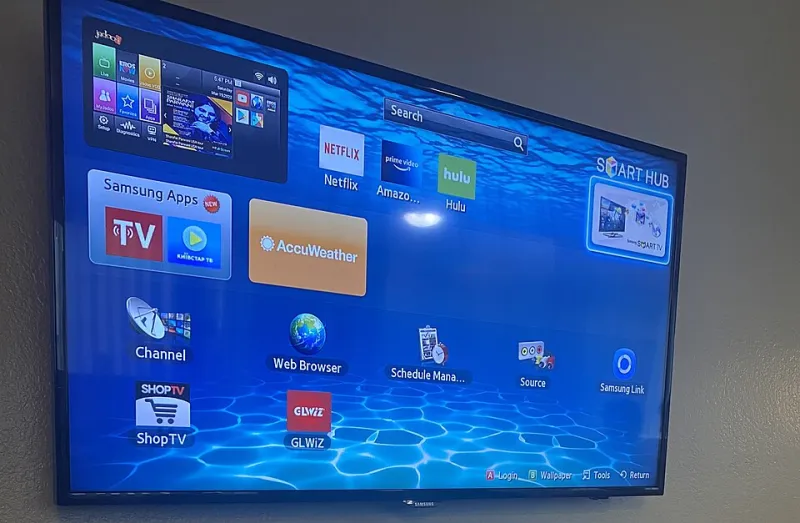
Photo: N Chadwick , CC BY-SA 2.0, via Wikimedia Commons
Nobody warns you that buying a house now involves a negotiation about somebody else's thermostat account.
It happens the same way every time. The listing mentions smart features. The walkthrough is a tour of wall-mounted tablets and app icons. Then you close, you move in, and the front door lock is still registered to a stranger's email address. The previous owner gets a notification that you've arrived. You get a lock you can't reprogram without a support ticket.
This isn't a hypothetical. It's a routine gap between how real estate paperwork works and how connected devices work.
Why this became a line item
Standard purchase agreements were written for appliances and fixtures — the refrigerator stays, the chandelier stays, the swing set is negotiable. They were not written for a garage door opener that talks to a cloud service, or a doorbell whose recordings live on someone else's subscription.
Real estate commissions and state forms have started catching up, but slowly. A sentence in the listing remarks like 'smart home features convey' is doing an enormous amount of unpaid work. It could mean a $400 lock or a $40 plug, and it doesn't tell you who owns the account.
So treat this like any other closing item: name the words, agree on the words, get the words in writing.
The nine words
1. Fixtures. Which devices are legally part of the house now? A wired doorbell and a wall-mounted thermostat usually qualify. A plug-in camera on a shelf usually does not. Spell it out anyway, because 'usually' is where lawyers live.
2. Included. Make an actual list. Model numbers, quantities, and the accessories — the bridge, the hub, the power adapter, the key fob. Half the frustration in these handoffs comes from a missing $30 bridge that renders the other $300 of gear useless.
3. Excluded. Sellers, list what you're taking. If you're pulling the smart display out of the kitchen, say so before the buyer builds a routine around it.
4. Transfer. Will the device ownership move to the buyer's account, or will the seller remove it entirely? These produce two very different outcomes. A clean removal means the buyer starts fresh. A transfer means existing automations and history may follow the house.
5. Accounts. Which accounts are being handed over, and which should be deleted? Never share a password. Use the manufacturer's transfer or invite feature, or have the seller remove the device so the buyer can claim it.
6. Hub. Who owns the hub, and does it stay? If the answer is a subscription-based service panel or a security system, that's a contract, not a gadget, and it may not be transferable at all.
7. Subscriptions. Video storage, professional monitoring, cellular backup. These are recurring charges attached to the property. Get the renewal dates and the cancellation terms in writing.
8. Codes. Garage keypad codes, door lock codes, alarm codes, safe combinations. Change every one of them at closing regardless of what the seller promises. A five-year-old neighbor kid may still know the garage code.
9. Deletion. What happens to the data? Doorbell clips, voice recordings, energy history, camera footage of the family that lived there before you. The seller should wipe it, and the buyer should confirm it was wiped.
Questions for the final walkthrough
Bring this list to the walkthrough, not the open house. You want the actual devices in front of you.
- Which app does each device use, and is it still installed and functional?
- Does every lock and keypad work with a code you set, not one the seller set?
- Is the hub online, and whose name is on the account?
- Do the automations still run after the seller's phone leaves the property?
- Are there devices buried in the app that no one has mentioned — sensors, valves, cameras?
- What is the monthly cost of everything connected to this house?
Photograph each device and each app screen. A timestamped photo of a thermostat serial number has settled more than one post-closing argument.
If you're the seller
Reset everything before you list, not after you close. Remove the devices from your account, factory reset the ones you're leaving, and write down the model numbers for the disclosure packet. It takes an afternoon and it prevents a month of angry text messages forwarded through your agent.
And if you're taking the smart lock with you, say so in writing. Someone is going to show up on moving day with a suitcase and no way to lock the front door.
The one-sentence version
Ask your agent to add a line to the contract naming each smart device, its account status, and its subscription, then confirm all three at the walkthrough — because 'smart home features convey' has never once been specific enough to survive a closing.