The Bedroom Stays Analog: Inside the Quiet Rebellion of Smart Home Owners Who Un-Plugged One Room

Photo: cozy analog bedroom no technology candlelight reading, via thumbs.dreamstime.com
There's a moment that seems to hit almost every serious smart home enthusiast eventually. For Marcus Webb, a network engineer in Columbus, Ohio, it came at 2:47 a.m. when a firmware update pushed to his smart bulbs turned his bedroom into a strobe light. "Every bulb in the house rebooted at once," he recalls. "My wife slept in the guest room for a week. That's when I started asking what all this automation was actually buying me."
Webb isn't alone. Across forums like Reddit's r/homeautomation and Facebook groups full of former HomeKit devotees, a counter-movement is taking shape. Call it the 'dumb first' approach: build your smart home, yes — but deliberately carve out one or two rooms that stay stubbornly, permanently analog. The bedroom tops the list. The dining room is a close second.
Why the Most Connected People Are Un-Connecting
The irony isn't lost on anyone. These aren't Luddites tossing their routers into a creek. They're the people who wired their homes for Thread before most folks knew Thread wasn't a sewing supply.
What triggers the reversal usually falls into a few buckets:
Failed dependencies. When your bedroom lights, blinds, and alarm all route through a hub, a single dead device or expired subscription can turn your morning routine into a troubleshooting session. Veterans call this a single point of failure — and after the third one, the romance wears off.
The always-on feeling. Several people we spoke to described a low-grade hum of awareness that their most intimate space was full of microphones, cameras, and sensors. Even if the privacy risk is debatable, the feeling of being monitored in the bedroom turned out to matter more than the convenience of voice-dimming the lights.
The 3 a.m. problem. Smart devices love to announce themselves at night. A chirping sensor, a status LED that pulses like a lighthouse, a speaker that reboots loudly — the bedroom amplifies every flaw in your setup.
The Vocabulary of Intentional Dumbness
Like any self-respecting tech movement, this one has generated its own jargon. Here's your decoder:
Dumb-first design — Planning a room around what works without power, internet, or an app. If the Wi-Fi dies, the room keeps functioning. It's the opposite of the typical smart home pitch.
Manual override — A physical switch, pull chain, or dial that bypasses the smart layer entirely. Veteran builders now insist that every automated device in any room should have one. In a dumb-first room, the manual control is the device.
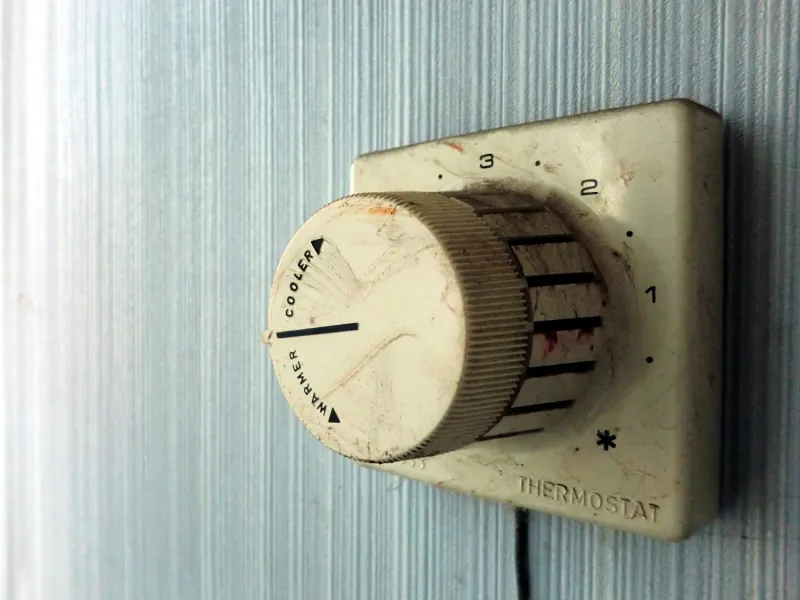
Graceful failure — The design principle that when technology fails, it should fail usefully. A smart lock that still takes a key. A thermostat you can still turn with a dial. A dumb-first room takes this to its logical conclusion: there's nothing to fail.
The analog sanctuary — The room itself. Usually the bedroom, sometimes a reading nook or dining room, kept free of connected devices as a deliberate act of household policy.
De-smarting — The act of removing connected devices from a space, often one room at a time. Not a full rejection — a targeted retreat.
How to Build Your Own Analog Sanctuary
If you're a convert-in-waiting, here's the playbook the de-smarters follow:
1. Pick the room where automation adds the least
Be honest with yourself. Does a voice-controlled bedside lamp improve your life, or did you just enjoy setting it up? The bedroom and dining room are usually low-hanging fruit — spaces where the tech-to-benefit ratio is worst.
2. Swap, don't just remove
Pull the smart bulbs, but put back quality dimmable LEDs on a good old-fashioned dimmer switch. Replace the smart plug with a mechanical timer if you need one. The goal is a room that feels finished, not stripped.
3. Keep the tech at the threshold
Many converts use motion or smart lighting in the hallway leading to the sanctuary — automated approach lighting that guides you to bed — while the room itself stays untouched. You get the convenience without the intrusions.
4. Write down your rules
Sounds silly, but the households that stick with this treat it like a policy: no speakers, no cameras, no connected displays past this door. When a shiny new gadget tempts you at Costco, the rule does the deciding.
Not a Rejection — a Redesign
Nobody we spoke to regretted their smart home overall. Webb still runs two dozen automations downstairs. What changed is his philosophy: technology should earn its place in each room, and in some rooms, it simply can't.
"The dumbest room in my house is the most reliable thing I own," he says. "No updates, no outages, no blinking lights. It just works. Turns out that's a feature."
For a site built on decoding the connected home, that might be the most useful definition yet: smart isn't a device count. It's knowing exactly where the tech belongs — and where it doesn't.