Dust, Dead Servers, and One Survivor: What a Decade-Old Smart Thermostat Taught Us About Buying for Longevity
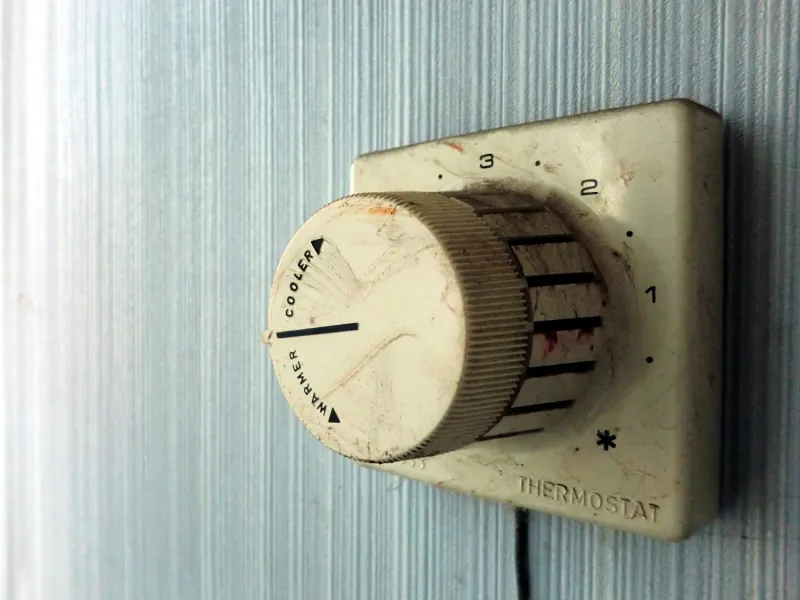
Photo: old smart thermostat on wall dusty home interior, via hvacseer.com
Somewhere in a cardboard box in your garage — or your uncle's attic in Ohio — there's a first-generation smart thermostat gathering dust. It cost real money back in 2014. It had a touchscreen, Wi-Fi, a smartphone app, and the promise of a smarter home. So what happens when you actually plug one in a decade later?
We found out. We sourced a well-worn 2014-era Wi-Fi thermostat (think early Nest competitor territory: touchscreen, app control, weather integration), dusted it off, wired it to a test furnace, and ran it through its paces. The results say a lot about which smart home gadgets are worth buying today — and which are future garage-sale inventory.
Round One: The Cloud Check
The first thing we did was install the companion app. It's still on the App Store. That's the good news.
The bad news: the account creation flow fails with a connection error. The manufacturer's cloud servers, which handled remote control, scheduling sync, and weather data, were shut down years ago. Without that backend, the app is a shell. You can open it. You can watch it spin. You cannot do anything else.
This is the classic smart home failure mode: the hardware works fine, but the company's server bill didn't. When the cloud dies, half the features on the box die with it. Remote control, notifications, energy reports — gone. The device doesn't know it's obsolete. It just sits there, waiting for a handshake that will never come.
Round Two: What Still Works on the Wall
But here's where it gets interesting. We wired the thermostat directly to the furnace anyway.
And it heats the house. Perfectly.
The core thermostat function — a relay that closes when the room is colder than the setpoint — is gloriously dumb technology wrapped in smart packaging. The schedule we programmed on the touchscreen still runs. The display still lights up. The temperature sensor still reads accurately. Ten years on, this thing does the single most important job it was sold for, no internet required.
That's the split every buyer needs to understand: cloud features have a shelf life measured in corporate fiscal years. Local features last as long as the hardware physically does.
The Longevity Scorecard
Based on our teardown and how the broader market has behaved, here's a rough guide to what survives a decade:
- Core function (heat, cool, switch a light, sense motion): Survives. This is electromechanical reality, not software.
- Local schedules and on-device settings: Survives. Stored in the device itself.
- Remote control via app: Dies with the servers, unless the vendor committed to local control.
- Voice assistant integration: Dies. It's all cloud, all the time.
- Firmware updates and security patches: Dies early. An unpatched Wi-Fi device on your network is a decade-old computer with your home Wi-Fi password.
- Resale value: Approaches zero. Nobody wants your orphaned cloud gadget.
What This Means for Your Next Purchase
If you're shopping for smart home gear in 2025, flip the usual decision around. Most people buy for features first and think about longevity never. Do the opposite.
Ask these three questions before buying anything:
- Does it work locally? If the device can do its main job without the internet — Matter-over-Thread devices, Zigbee and Z-Wave gear running through a local hub, thermostats with on-device programming — it will outlive the vendor's business model.
- Does the company support open standards? A thermostat that speaks Matter can be controlled by whatever platform exists in 2035. A thermostat locked to one company's proprietary app can only be controlled by that company, for as long as that company feels like it.
- Is there a dumb fallback? The best smart devices degrade gracefully. Our 2014 thermostat's saving grace was that it was still, underneath everything, a thermostat. A smart lock that can't be opened with a physical key is a liability waiting for a server outage.
The Real Cost of 'Obsolete'
Here's the uncomfortable math. A $250 smart thermostat that goes fully dead in six years costs about $3.50 a month. A $180 model that keeps heating your house locally for fifteen years costs about a dollar a month — and never ends up in a landfill because a startup pivoted.
The lesson from our dusty attic find isn't 'don't buy smart home tech.' It's that the smartest feature on any device is the one that keeps working when the company behind it doesn't. Buy for the wires, not the Wi-Fi. Your future self — the one standing in the attic in 2035, holding a brick that used to be a thermostat — will thank you.