Two Weeks of Talking Like a Normal Person: What Happened When We Banned Smart Home Jargon at Home

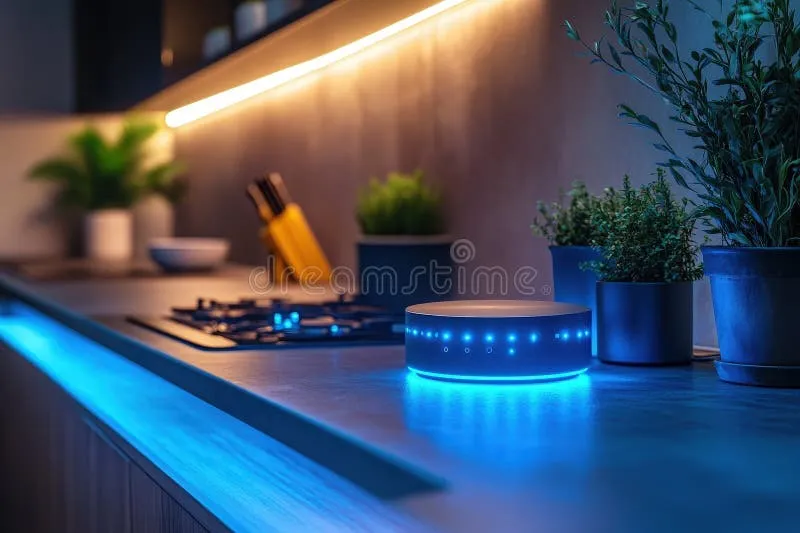
Photo: Unseen Studio, CC0, via Wikimedia Commons
The rule was simple and, honestly, kind of humiliating: for two weeks, nobody in my house was allowed to use smart-home vocabulary. Not me, not my spouse, not even the cat's fault when the hallway light did something weird. If a bulb turned on when I walked in, I had to describe it the way my neighbor Carol would: "The hall light comes on when I walk past." No "motion trigger." No "automation." Just words a human who owns a normal house would use.
What started as a silly experiment turned into the most useful buying guide I never planned to write. Because it turns out that when you strip away the vocabulary, you can suddenly tell which features are real and which ones are just words wearing a trench coat.
Week One: Everything Sounded Ridiculous
The first few days were comedy. My evening routine—"Alexa, run Movie Night"—became "Alexa, make the living room lamps dim and the TV soundbar get loud." It's clunky. It's eleven syllables longer. And that clunkiness taught me something immediately: the word "scene" exists because the feature it describes is genuinely useful. You're bundling several device changes into one command. There's no simpler way to say it. That's a jargon word earning its keep.
Contrast that with the phrase "edge computing" on a sensor box I bought last spring. When I tried explaining the sensor without the term, I said, "It decides things by itself instead of asking the internet first." Huh. That's... actually a meaningful feature! It means the sensor still works when my cable company has one of its Tuesday-afternoon meltdowns. Okay, another point for jargon that maps to reality.
Then came the words that collapsed under questioning.
The Marketing Fog Rolls In
My smart plug's box promised "energy monitoring with AI-powered insights." Two weeks of plain talk forced me to describe what it actually does: it tells me how much electricity the thing plugged into it is using. That's it. The "AI-powered insights" turned out to be a push notification that said "Your space heater used a lot of energy today." Thank you, machine intelligence.
Same fate for "smart scheduling," which decoded to "it turns off at the time you set." And "adaptive learning," on my thermostat, which in plain English is "it notices when you usually change the temperature and does it for you." That one's a real feature, to be fair—but the word "adaptive" was doing a lot of work it didn't need to.
By the end of week one, I had a sticky note on the fridge with two columns. I started calling it the Fog Test, and it's become my default filter before buying anything new.
The Fog Test: Three Questions Before You Buy
Here's the filter, plain as I can make it. Before any smart device gets your money, try describing its headline feature to an imaginary neighbor without using any word from the box. Then ask:
- Can I explain it in one plain sentence? If yes, it's probably a real feature. "It locks itself when the door closes" is a real thing worth paying for.
- Does the plain version still sound useful? "It turns on the porch light at sunset" survives translation. "It leverages ambient intelligence" does not—because under the fog, that usually just means a motion sensor.
- Does the plain version reveal a disappointment? This is the big one. When I translated "works with your existing ecosystem" for my old hub, the plain version was "it only talks to devices from the same brand." That sentence made me return a product I'd almost kept.
The third question is where the money gets saved. Jargon's main job, as far as I can tell, is to make ordinary features sound exclusive and ordinary limitations sound like architecture.
The Words That Earned Their Keep
Not everything came out of the experiment with mud on it. A handful of terms survived plain-talk translation and proved they point at something real:
- Automation — "the house does this by itself." Genuinely useful, genuinely hard to say more simply.
- Hub — "the translator box that lets gadgets from different brands talk to each other." Clunky without the word.
- Matter — love it or shrug at it, the plain version ("a shared language so gadgets from different companies can work together") describes something real that matters to your wallet.
- Geofencing — "it knows when your phone leaves the neighborhood and reacts." Real feature, weird word, keep the word.
Everything else on my sticky note—the insights, the intelligence, the ecosystems, the seamless integrations—washed away like chalk in the rain.
The Verdict After Fourteen Days
Did the ban make my home run worse? Not really. Describing my setup in neighbor-speak worked fine for daily life, which tells you something: the vocabulary is mostly for the buying and troubleshooting moments, not the living-in-it moments. My spouse, who has quietly refused to learn the word "routine" for two years, was vindicated and insufferable about it.
But the exercise permanently changed how I shop. I now do the Fog Test in the aisle, out loud, feeling like a slightly unhinged person. "This $60 plug tells me when the lamp is using power." If the box's fancier version of that sentence promises more than that, I put it back.
Smart homes aren't complicated. The words are. And once you practice saying what a device actually does—no scenes, no insights, no intelligence—you'll find the fog lifts fast, and so do a lot of unnecessary line items on your receipt.