Is Your Speaker Spying or Just Listening for 'Alexa'? The Real Story Behind the Scariest Smart Home Words
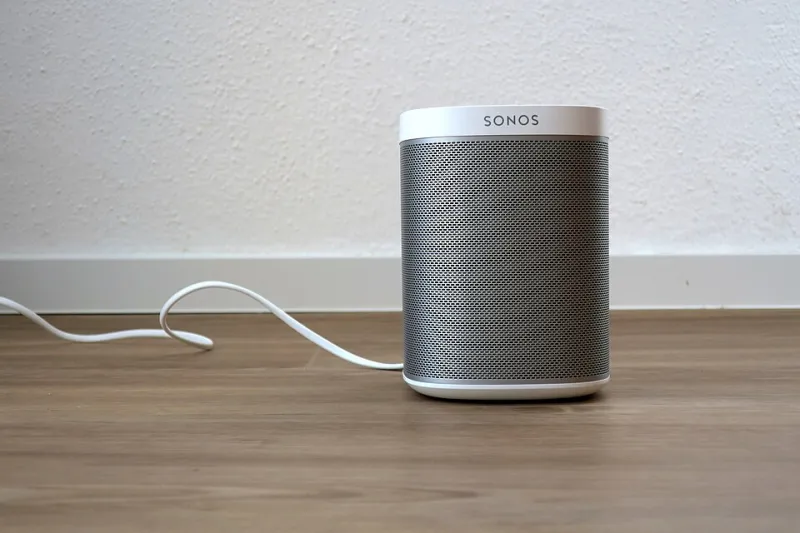
Photo: Robert Wetzlmayr, CC BY-SA 4.0, via Wikimedia Commons
Let's be honest: the vocabulary around smart speakers was practically designed to freak you out. Always listening. Cloud-connected. Sharing data with third parties. If you read a privacy policy cover to cover (nobody does), you'd be forgiven for wrapping your Echo Dot in tinfoil and calling it a day.
But here's the thing — most of these scary-sounding terms describe fairly mundane engineering. The trick is knowing which words signal a real privacy trade-off and which are just industry jargon wearing a trench coat. So let's translate.
'Always Listening' — Yes, But Not the Way You Think
Every smart speaker on your counter — Amazon Echo, Google Nest, the Apple HomePod mini — is constantly sampling audio. That part is true. But the chip inside isn't recording your kitchen arguments; it's running one narrow pattern-matching job: listening for a specific sound, like "Alexa" or "Hey Google."
Think of it like a bouncer at a bar who only knows one phrase. Everything else you say bounces off. Only after the wake word fires does the speaker start recording and send audio upstream. On most devices, that pre-wake-word audio exists for a fraction of a second in local memory and is never stored.
The catch? False wakes happen. If your TV show or a podcast says the wake word, your speaker may record a few seconds of whatever comes next. That's why the occasional accidental recording shows up in your voice history — and why it's worth reviewing those settings.
Wake Words and Why They Matter More Than You'd Guess
The wake word is your privacy gate. A few practical notes:
- You can change it. Amazon lets you pick from several options; some are two syllables and less likely to false-trigger than others.
- You can mute it. Every major speaker has a hardware mic switch. When it's off, the device is deaf — no software toggle, a physical one.
- Voice history is a setting, not a fact of life. You can set recordings to auto-delete after three months, or not save them at all.
'Local Processing' vs. 'The Cloud' — Where Do Your Words Actually Go?
Here's where devices really separate. When you say "turn off the porch lights," two things can happen:
Cloud processing: your audio (or at least a transcript) ships to Amazon, Google, or Apple's servers, gets interpreted there, and a command comes back. Fast internet required, and your request lives on someone else's servers.
Local processing (sometimes called on-device or edge inference): the speaker interprets your command on its own silicon. No audio leaves the house for routine requests.
Apple has been the most aggressive here — many HomePod requests never leave the building, and voice requests are tied to a random identifier rather than your Apple account. Amazon has pushed "Alexa processed on-device" for common commands. Google remains the most cloud-reliant of the big three, which isn't automatically bad, but it's worth knowing.
'Telemetry' and 'Third-Party Sharing' — The Boring Words That Matter Most
Telemetry just means usage data: how often you use a skill, when the device crashes, what features you touch. It's not your conversations — but it's still data about your household's rhythms, and it feeds the ad machine at companies that sell ads.
Third-party sharing is the term that should get more of your attention. When you enable a skill or integration, you're often handing that developer access to your request data. The vendor's privacy posture doesn't extend to every app you plug into it.
The Homolexis Privacy Checklist
Before you plug in any new connected speaker or camera, run through five questions:
- Does it do local processing for basic commands? Check the spec sheet for phrases like "on-device" or "offline voice."
- Is there a hardware mic (and camera) switch? Software mutes can be quietly reversed by updates.
- Can you auto-delete voice history? If yes, set it up on day one.
- What's the data-retention window? Three months is reasonable; "indefinitely" deserves scrutiny.
- Does it work without an account, or with a pseudonymous one? The less your voice ties back to your real identity, the better.
The Bottom Line
None of these devices are microphones for the government, and none are perfectly private either. They're appliances with a business model attached. The words sound scary because fear is a good headline, but the reality lives in settings menus — and now you know which ones to open.